IPF Round Table Discussion on Humans and Environment
Total Views |


From Green to HARIT — only holistic action is truly sustainable: Shri Gopal Arya
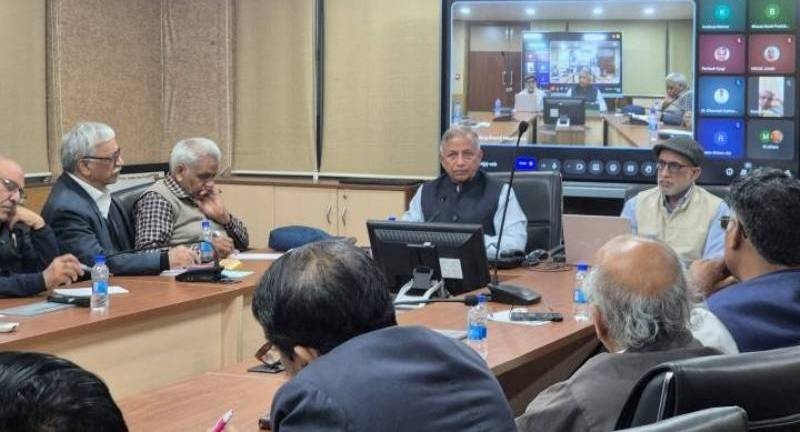
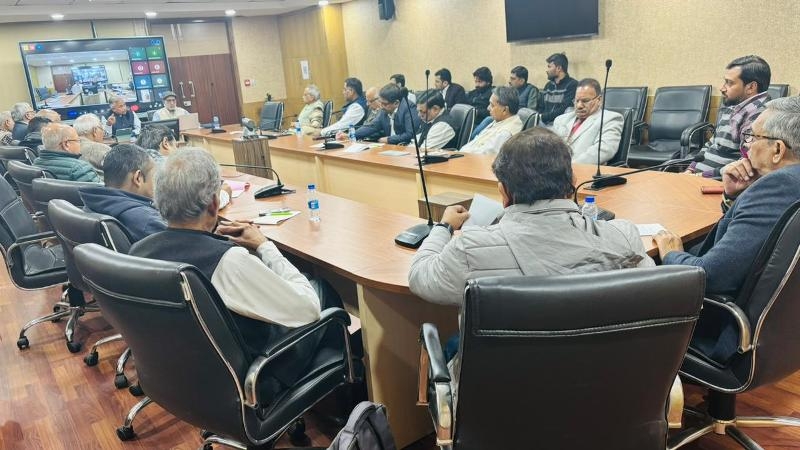
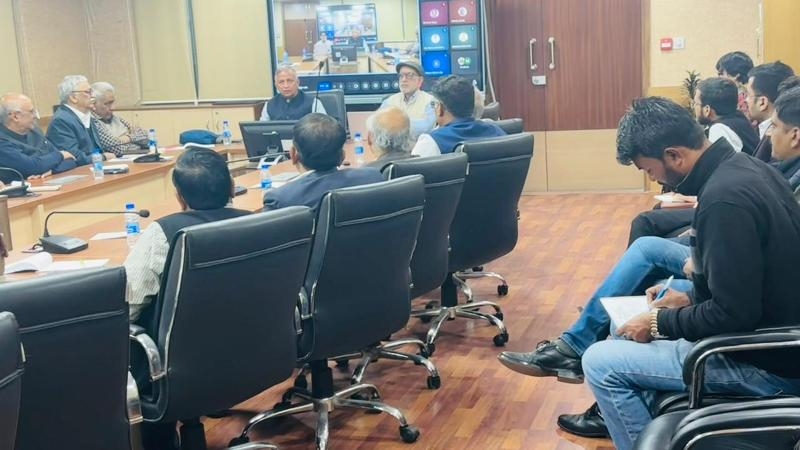
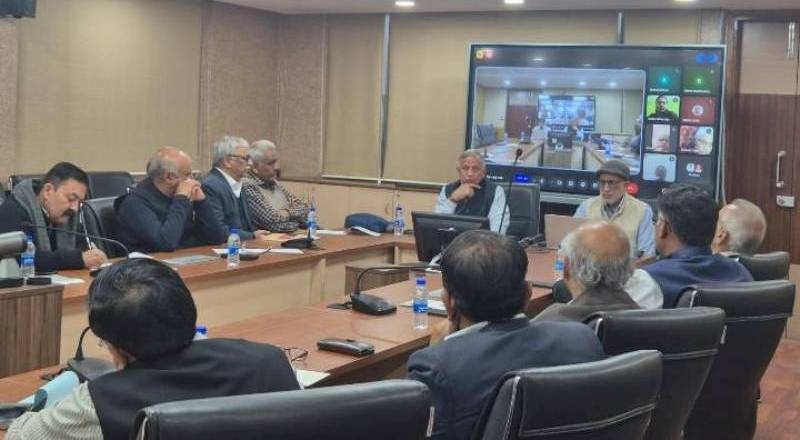
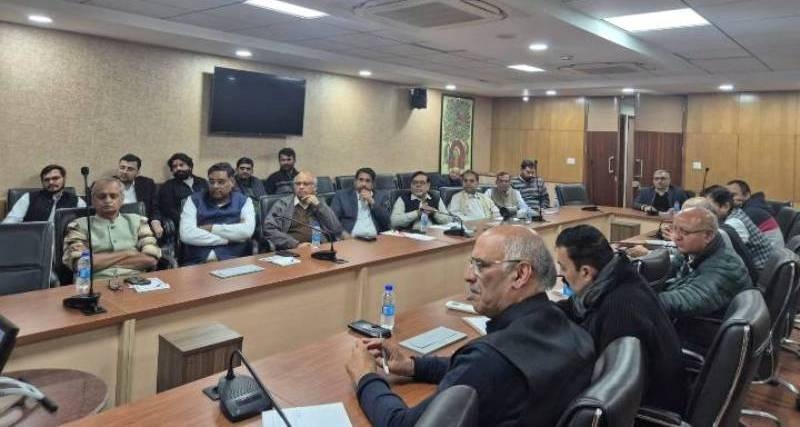
28 November, New Delhi: “Conservation of nature must begin with the individual, then families, then society. This must be woven into our daily lifestyle,” said Shri Gopal Arya, National Convenor, Paryavaran Vibhag of Rashtriya Swayamsevak Sangh. He was speaking at a round table discussion on ‘Humans and Environment’, organised by the India Policy Foundation at the Seminar Hall of Laghu Udyog Bharati, New Delhi. He presented a reflective analysis on the relationship between humans, culture, and the environment, drawing from India’s indigenous traditions and value systems. The discussion was moderated by Dr Kuldeep Ratnoo, Director, India Policy Foundation and was attended by academicians, policymakers, lawyers, journalists and environmentalists.
The keynote address by Shri Arya revolved around four major points, highlighting how cultural distortions, industrial revolutions, materialistic lifestyles, and misinterpretations of environmental concepts have led to today’s ecological crisis. In his opening remarks, he said that the world is witnessing a series of environmental catastrophes such as the floods, landslides and cloudbursts. Yet, humanity continues to repeat the same mistakes without learning from these.
_202512111613225039_H@@IGHT_424_W@@IDTH_450.jpeg "seminar")
Focussing on the ancient Indian cultural practices, he said, “For thousands of years, Indian culture and traditional practices maintained complete harmony with nature. During these periods, pollution was unheard of, despite the fact that India had abundant resources and no scarcity of land, water, forests, or animals.” He highlighted the importance given to nature by recounting a story from Jodhpur, about 500 years ago, where a woman (Amrita Devi Bishnoi) and 362 villagers sacrificed their lives to protect 300 trees. He stated that this unparalleled act reflected the deep reverence for nature embedded in Indian culture — a level of dedication rarely found anywhere in the world. Such actions were not movements or revolutions but expressions of a way of life taught by Indian gurus and upheld by communities. Another cultural example that he noted is the existence of cow shelters but not buffalo shelters. He added that this point is meant to encourage deeper contemplation rather than immediate conclusions.
Following this, Shri Arya argued that there is a need to rethink “environmental protection.” He asked, “Are humans protecting nature, or is nature protecting humans?” He warned that incorrect usage of terms shapes distorted beliefs and pointed out that throughout Indian history, meditation, penance and spiritual awakening happened under trees, signifying the nurturing role of nature in human evolution. According to him, the core issue lies in examining how our ancient culture became distorted. “Humanity must reflect on its relationship with nature, starting with awareness of self and existence,” he added.
Coming to the present times, Shri Arya pointed out that the last 300 years saw the Industrial Revolution which was followed by the Digital Revolution and the AI Revolution. He argued that these revolutions led to increased production, which in turn led to increased consumption. “This altered human behaviour, moving society away from the spiritual philosophy of Īśā vāsyam idaṁ sarvaṁ (Everything in this universe is pervaded by the Divine) to a predominantly materialistic lifestyle,” he added.
He further stated that a distinction must be made between vatavaran (atmosphere) and paryavaran (environment). “To discuss ‘environment’, we must first understand humans, because human beings exist due to nature, but nature is being destroyed due to human actions. The dilemma begins when humans mistake themselves merely as their physical body. This leads to entrapment in material desires. The environment within humans must be purified before attempting to purify the external environment.” he said.
Shri Arya added that according to our Shastras, the environment consists broadly of water, air, land, forests and animals. He highlighted that humans form just 0.01% of this ecological composition but pose the maximum threat to the remaining 99.9%. Therefore, he emphasised that the improvement of nature depends on improving the internal human environment.
He went on to note that human life begins with inhalation and ends with exhalation. From birth to death, every breath depends on the environment, making it all-inclusive and indispensable. He stressed that the Indian philosophy has always focussed on promoting alternatives rather than protests, and solutions rather than highlighting problems. Recollecting core ethical principles, atmavat sarva-bhutesu: feel the happiness and sorrow of all beings as one’s own and sarve bhavantu sukhinah: the wish for universal well-being, Shri Arya reminded the gathering that true happiness cannot be found in materialism. He stated that the fact that oxygen could not be purchased even by the rich during the Covid crisis proved this. He further added that humans survive on food, water, and air, none of which they created. Indian culture traditionally protects even the smallest insects. “Shanti” is central to Indian culture and represents environmental and internal harmony. The question that remains is: Can this belief system be made global?
Focussing on solutions, Shri Arya said that a proposed transformative approach is shifting from “green” to HARIT – Holistic Actions for Revival of Indigenous Traditions. He argued that “green” has become associated with greed, selfishness, and materialism while HARIT represents culture-based, holistic sustainability. The difference resembles the contrast between India, a colonial label and Bharat, a civilisational identity.
Elaborating further, he stated that the paradigm must shift toward co-existence instead of mere existence and empathy must be put above sympathy. The vision includes: i) creating HARIT villages built on indigenous practices; ii) building HARIT houses, where eco-friendly living becomes part of everyday lifestyle; iii) encouraging municipalities where garbage does not leave the household due to segregation by recycling, composting, and reuse at source and; iv) avoiding wastage such as never leaving water bottles half-full.
Shri Arya said human identity can be understood through the lens of 3Ps: Planet, Person and Profit. He stressed that sustainable development demands balancing all three. He gave the examples of Ek Thela, Ek Thali (One Bag, One Plate), as one of the world’s largest eco-friendly initiatives, launched to make Mahakumbh 2025 plastic-free and Harit Vistarak Youth, a growing network of young volunteers who work selflessly to protect the environment and spread eco-consciousness which proves that major solution lies in refurbishing, repairing, and reusing materials to reduce waste and resource consumption.

Dr. Kuldeep Ratnoo, in his remarks emphasised that our ancestors always thought about the well-being of future generations, whereas today’s society focuses primarily on personal luxury and comfort without considering even their own old age or middle age. This shift occurred because growth began to be equated with consumption. He pointed out that traditionally, wealth was measured through natural assets such as land, water, animals, and trees. In contrast, modern systems require enormous energy consumption — for example, creating bitcoin demands huge electricity, and the growing power requirements of artificial intelligence servers pose a serious environmental threat. He gave the example of severe air quality of Delhi, a city which provides physical comforts but takes away precious years of life from its citizens.
“Contemporary thinking values economic productivity only when natural ecosystems are exploited; a garden full of trees and fruits sustaining biodiversity is seen as economically irrelevant unless its produce is sold. These dangerous growth paradigms and parameters are degrading the environment. Even producing a single pair of jeans or manufacturing a car requires thousands of litres of water, making it impossible for us to repay nature even over the next ten generations” he said. Dr. Ratnoo called for a decisive shift toward sustainable living, stressing the need for both small individual actions and large systemic efforts. He highlighted the difference in Indian value system which places emphasis on worship of nature as Divine power, and the western thinking which considers man as master of nature.
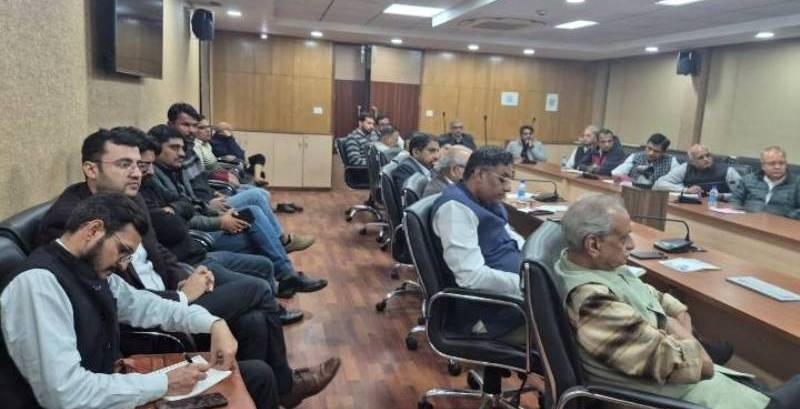
During the Q&A session, it was suggested that there should be a charter outlining how we can transform the world starting from the individual unit and extending to all of humanity. Participants recalled that earlier generations even washed their hands with soil, reflecting a simpler, more sustainable lifestyle. A key concern raised was the disproportionate carbon footprint between the “haves” and the “have-nots,” a disparity that can only be addressed through cultural change.
Shri Arya highlighted striking contrasts such as Cherrapunji, which receives the highest rainfall yet struggles with drinking water, while Jaisalmer, with the lowest rainfall, manages to sustain both humans and animals. He noted that although America consumes 110 kg of plastic per capita annually without facing crisis-level consequences, India—with one of the lowest plastic consumption rates—suffers from poor waste management, leading to microplastics in the soil.
He further noted that the World Health Organisation recommends 422 trees per person for ecological balance, but India has only 28 per person and Delhi just three, explaining its poor air quality. To counter this, he encouraged the use of indoor plants, stating that there are at least 31 possible spots inside a home where plants can be placed, effectively turning each house into a small nursery capable of improving indoor air quality. It was emphasised that a nationwide environmental awareness campaign is essential. Participants also pointed out the mindset of keeping lights and air conditioners on even during the day.
Shri Arya stressed the need for policy-centric solutions backed by political will, alongside people-centric measures that remind citizens of their fundamental duties rather than only their rights. Moving “from I to we” is essential. He noted that households can save up to 35 percent of electricity simply by switching off fans and lights when not in use, and emphasised the need to reset, redefine, and restart our practices according to modern realities while still learning from the past. Further suggestions included encouraging people to spend more time in sunlight, initiating government-led door-to-door environmental awareness drives, and promoting campaigns where citizens deposit plastic bottles in exchange for small rewards.
Dr. Ratnoo in his observations added that today’s excessive packaging culture—where single products contain multiple layers of plastic—harms the environment and falsely signals economic growth. He argued that a cost must be attached to such practices and that society must drastically reduce plastic usage.
In his concluding remarks, Shri Arya said that environmental degradation stems from human actions and distorted thinking. Restoration begins with transforming the internal environment of individuals, guided by Indian civilisational principles of harmony, empathy, minimalism, and universal well-being. The shift from green to HARIT signifies a movement from materialistic, fragmented approaches to a culturally rooted, holistic lifestyle. Through individual action, family participation, community engagement, and indigenous wisdom, a sustainable future built on co-existence is possible.