IPF Roundtable Discussion on Armed Forces Revolt Against British
Total Views |


IPF Roundtable Discussion on Armed Forces Revolt Against British
Eighty Years Since 1946: The Armed Forces Revolt That Shook the British Empire
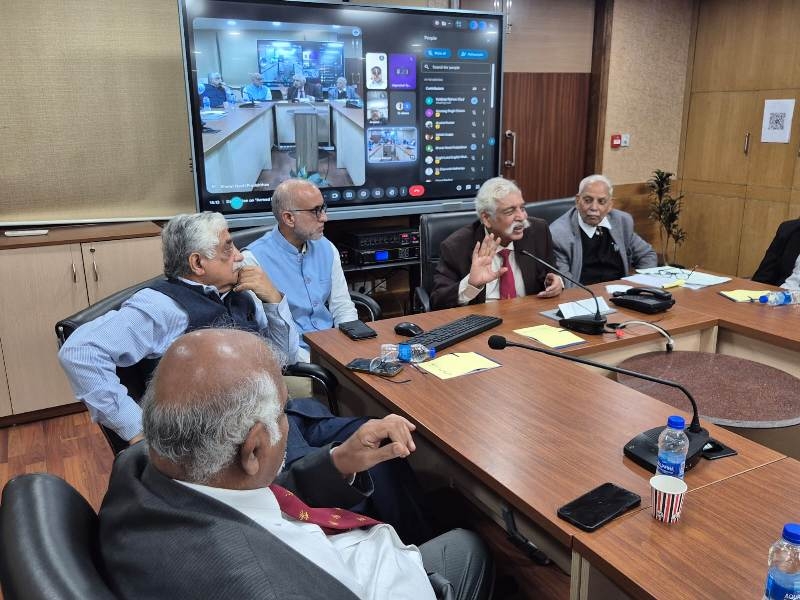
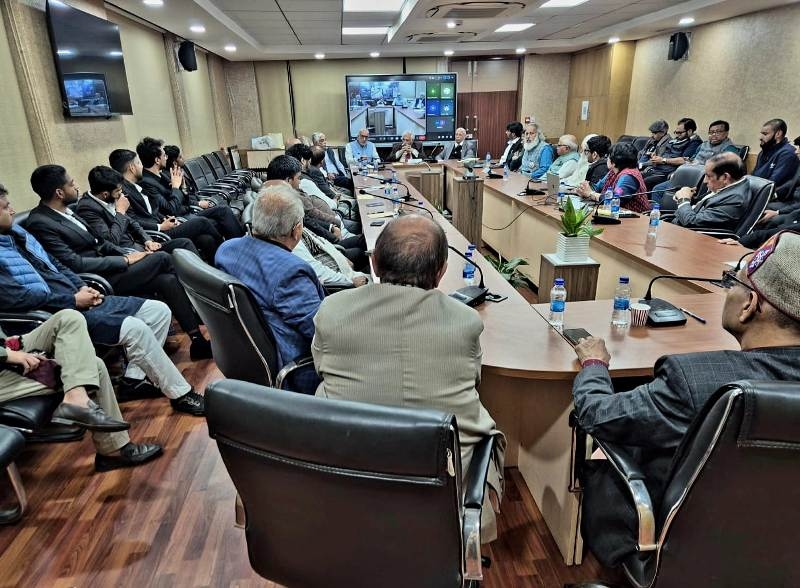
18 February 2026, New Delhi: The India Policy Foundation (IPF) convened a roundtable discussion to commemorate 80 years of the 1946 Armed Forces Revolt, bringing together distinguished veterans to revisit this pivotal but lesser-known chapter of India’s freedom struggle. Major General Dr. Gagan Deep Bakshi, SM, VSM (Retd.), Group Captain Karan Singh Bhati (Retd.) and Brigadier K.D. Malhotra (Retd.) reflected on the impact of the Royal Indian Navy uprising, the Indian National Army trials, and the wider unrest within the armed forces in 1946. Dr Kuldeep Ratnoo, Director, IPF moderated the discussion.
Introducing the topic, Dr Kuldeep Ratnoo remarked that the British rule in India was marked by cruel indifference to suffering Indians. Referring to repeated famines under colonial administration, he stated that millions of Indians perished due to hunger, but British officials and politicians didn’t care a bit. Therefore, it is difficult to accept the popular narrative that British policy towards India shifted out of moral sympathy in response to Mahatma Gandhi’s fasts and hunger strikes.
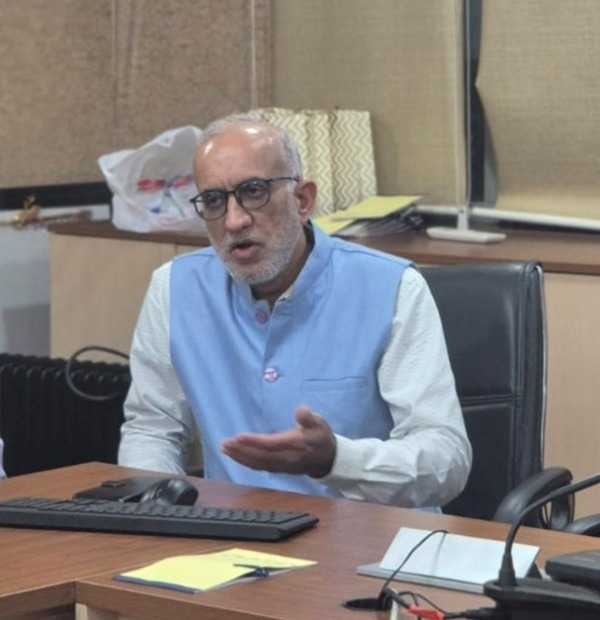
Dr Ratnoo noted that the 1946 uprising within the armed forces represented the first decisive signal to the British that their hold over India had become untenable. He recalled that unrest first appeared within segments of the Royal Indian Air Force and then spread to other branches, culminating in the Royal Indian Navy uprising on February 18, 1946. He described HMIS Talwar in Bombay as the epicentre of the revolt, where nationalist slogans were painted by naval ratings before the visit of senior British officers. The arrest and solitary confinement of some ratings, he argued, further inflamed tensions and led to open rebellion. During the uprising, naval personnel lowered the British flag and hoisted the Indian flags, symbolising broader nationalist sentiment.
Dr Ratnoo further said that the revolt spread across numerous ships and establishments and when confronted by British forces, Indian sailors threatened to retaliate if excessive force was used. They pointed their guns towards the Gateway of India and the Taj Hotel. He emphasised that when naval ratings came ashore in Bombay, sections of the public expressed solidarity through strikes and shop closures. However, the British-owned shops remain open. As a result, public anger escalated against these commercial establishments, further widening the unrest.
He argued that the movement which received popular support was eventually restrained after political intervention at the senior level. He suggested that British authorities persuaded Congress leaders, particularly Sardar Vallabhbhai Patel, to help curb the naval revolt and public unrest. Patel met the leaders of protesting servicemen and assured them that the process to gain independence has begun and so they can peacefully return to their duties, leading to the eventual cessation of the revolt. Although the revolt was called off after senior leaders’ assurances, it deeply unsettled British authorities and highlighted the fragility of their control over the armed forces.
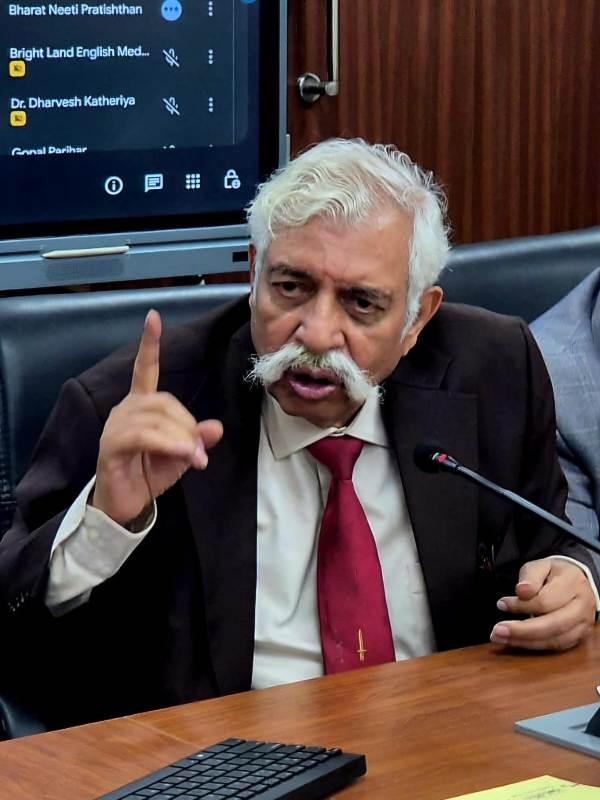
In his remarks, Major General Gagan Deep Bakshi contended that India’s independence was not the result of purely non-violent methods but was fundamentally shaped by armed resistance and the psychological impact it had on British authority. He asserted that the 1942 Quit India movement had been “completely crushed, within months” despite later narratives portraying it as decisive. In his view, the British withdrawal was driven primarily by the activities of the Indian National Army (INA) and the leadership of Subhas Chandra Bose, which shook the loyalty of Indian soldiers serving the British Crown. He argued that Britain was in no position to rely indefinitely on 25 lakh battle-hardened Indian troops if their loyalty became uncertain.
Tracing the origins of the INA, he noted that the first Azad Hind Fauj had been conceived by Captain Mohan Singh, and that Rash Behari Bose later invited Subhas Chandra Bose as he believed only Bose can provide leadership across caste, creed, and religious lines. Major General Bakshi also recounted in detail Bose’s submarine journey from Germany to Japan in 1943, describing it as characteristic of his resolve and willingness to risk his life for India’s freedom.
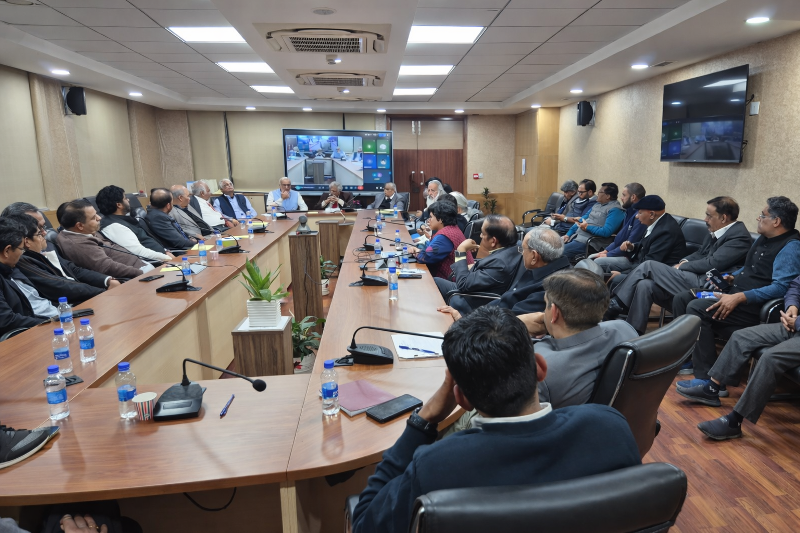
General Bakshi highlighted that the anniversary of the 1946 Royal Indian Navy uprising receives far less public attention than it deserves. He suggested that it should properly be termed a “revolt” rather than a mutiny, as it reflected widespread disaffection within the armed forces. According to him, the episode caused significant panic within the British establishment, particularly when naval ratings (enlisted personnel in the Royal Indian Navy) trained their guns against British officers at sea. He described the revolt as marking “the last nail in the coffin of British rule in India”.
He linked the uprising to the wider public unrest created by the trials of the INA officers at the Red Fort in late 1945. He said trials of Major General Shah Nawaz Khan, Colonel Prem Sahgal and Colonel Gurbaksh Singh Dhillon played a major role in mobilising public against British rule. Massive demonstrations all over India forced the British to release the INA officers. This became a turning point in our freedom struggle and hastened the end of British rule in India.
Referring to the popular slogan Dilli chalo, Lal Qile par tiranga fahraenge, he argued that the decision to hold the trials and courts-martial at the Red Fort added “insult to injury” and inflamed nationalist sentiment among all Indians, including Indian soldiers serving the British forces. Indian soldiers, though serving under British, were highly impressed by the bravery of Azad Hind Fauj and viewed the INA officers as Deshbhakts. He emphasised that the public nature of the trials became a triggering factor that eroded loyalty within the armed forces.
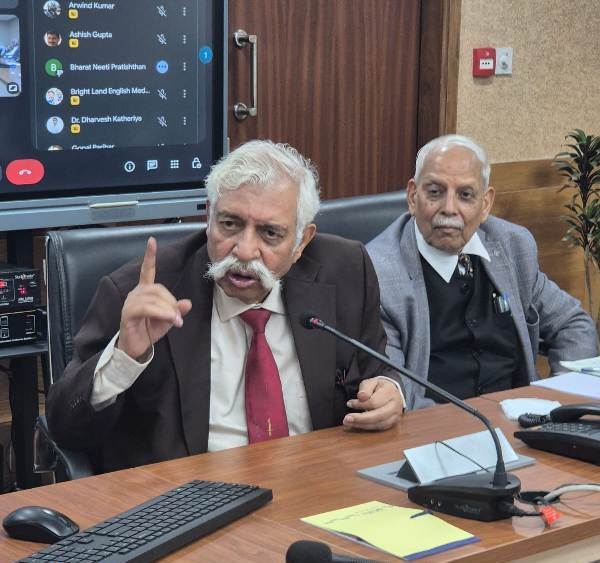
Major General Bakshi argued that post-independence historiography has underplayed these armed dimensions of the freedom struggle. He stated that the British attempted to keep India politically restrained and divided, including by reinforcing social divisions. He described the struggle for independence as not merely a military or political conflict but also a “battle of narratives,” asserting that India has yet to fully reclaim its historical story. To make progress in this direction, he appealed all Indians to demand for the establishment of a national memorial in New Delhi dedicated to the soldiers of the Azad Hind Fauj. He said that it took several decades after independence to install statue of Netaji Subhas Chandra Bose near the India Gate, but a memorial in honour of thousands of brave soldiers of the Indian National Army (INA), who sacrificed their life fighting for Azadi from British rule, is yet to be built in the national capital.
Group Captain Karan Singh Bhati (Retd.) agreed that independent India has not adequately honoured the legacy of the Indian National Army (INA) and the wider armed resistance that contributed to the end of British rule. He observed that no major political party has actively campaigned for a dedicated INA war memorial and backing the demand of General Bakshi, he called for such a memorial to be established in Delhi as a symbol of bravery and sacrifice.
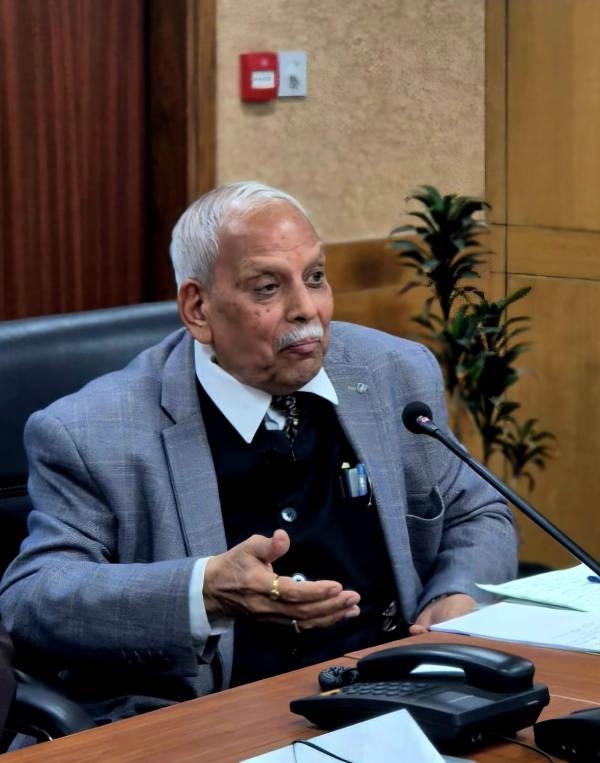
He maintained that INA shook the foundations of British authority and left the colonial government with little choice but to leave soon. Drawing a historical parallel, he described the Revolt of 1857 as an armed uprising that set an early precedent for military resistance. He argued that in 1946, this pattern re-emerged in the form of unrest within the Royal Indian Navy and other branches of the armed forces, including Air Force.
He also brought attention to the fact that in early 1946, discontent also surfaced within the Royal Indian Air Force, where airmen at several bases went on strike against the British control. These actions coincided with rising nationalist sentiment following the INA trials. The unrest within the Air Force, together with the naval uprising and the Jubbulpore (Jabalpur) revolt, signalled to British authorities that discipline within the armed forces could no longer be taken for granted.
Group Captain Bhati contended that after independence, this chapter of history was deliberately supressed in official narratives. He emphasised the need to create greater public awareness about armed forces revolt as a decisive and authentic phase of India’s struggle for independence. He concluded by underscoring that countless sacrifices were made in the war of independence and that due recognition must be accorded to those who took up arms against colonial rule.
Brigadier K.D. Malhotra (Retd.) reflected on the historical paradox that a relatively small European power was able to rule a vast and diverse country like India for nearly two centuries. He pointed out that following the death of Maharaja Ranjit Singh, British influence expanded rapidly in Punjab, ultimately leading to annexation. In his view, this demonstrated how internal divisions and weakened leadership created openings for colonial consolidation.
He referred to the aftermath of the Revolt of 1857 and suggested that the British subsequently encouraged constitutional and political dialogue as a “safety valve” to channel nationalist energies. Citing the role of A.O. Hume in the formation of the Indian National Congress, he implied that such institutional mechanisms were intended to prevent future armed uprisings by steering dissent into controlled political forums. Most Congress leaders were lawyers, and they believed in the power of negotiations with the British.
Brigadier Malhotra contrasted this approach with that of Subhas Chandra Bose. According to him, Bose concluded that peaceful negotiations alone would not secure independence and that armed resistance was necessary to demonstrate strength.
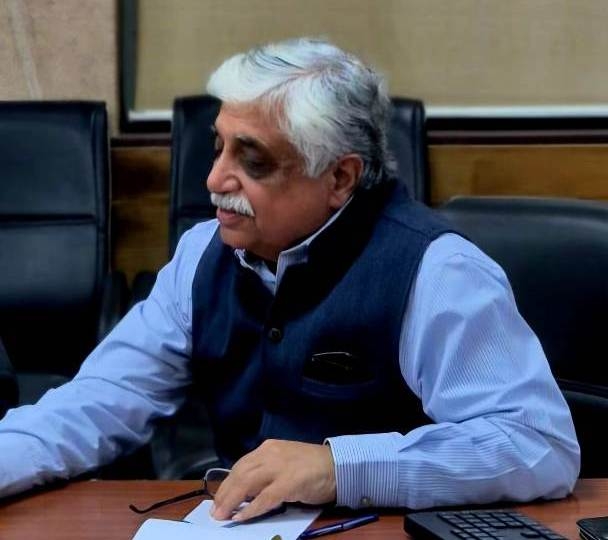
He also stressed the broader strategic context of imperial expansion, asserting that the British employed divide-and-rule strategies in other parts of the world as well. He linked imperial ambitions to geopolitical rivalries, including competition over strategic access and resources. Referring to the 1946 naval revolt, he mentioned that Bombay witnessed intense unrest during this period, underscoring the scale of upheaval accompanying the Royal Indian Navy revolt.
He recalled that in February 1946, unrest also surfaced at the Signals Training Centre in Jabalpur, where soldiers of the British Indian Army went on strike, influenced by developments in the Air Force, Navy and the ongoing INA trials. This episode reflected a wider erosion of unquestioned loyalty within sections of the armed forces. The Jabalpur incident, alongside the naval uprising and air force strikes, contributed to growing British concerns about the reliability of Indian troops in the final phase of colonial rule.
Brigadier Malhotra argued that India must cultivate historical consciousness and unity. He suggested that civilizational awareness and cultural confidence are essential to national strength. He observed that many Indians remain unaware that India Gate commemorates soldiers who died fighting for British in the first World War, and he called for greater recognition of those who sacrificed their lives in places such as Burma (Myanmar), the North-Eastern region and Andaman and Nicobar Islands during the freedom struggle. He concluded by emphasising national unity, cultural preservation, and strategic self-assertion in a competitive global order.
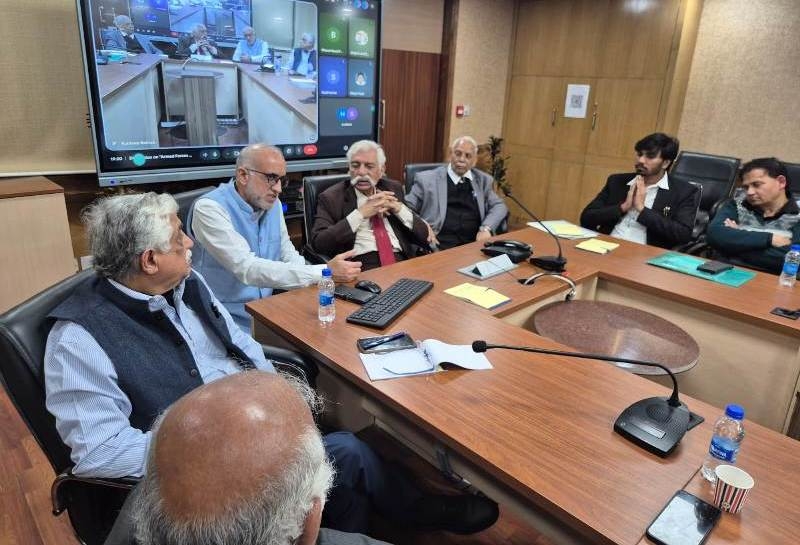
Summing up the discussion, Dr Ratnoo concluded that British withdrawal from India was not an act of benevolence but the result of structural exhaustion after World War II. This was combined with mounting unrest within the armed forces and society at large. He stated that India had been economically squeezed under colonial rule and there wasn’t much left to be exploited. By the end of the war, a weakened Britain no longer possessed the capacity to sustain its imperial hold. Indian soldiers and policemen were the main strengths of colonial administration, and once their royalty came under doubt, British had no other option but to safely exit before situation worsened as in 1857, when hundreds of British officials and their family members were killed by Indian sepoys.
During the question-and-answer session, participants raised concerns about competing historical narratives at the international level. One question referred to claims circulating in China that the Opium Wars were initiated by India. The speaker emphasised the need for India to actively counter such narratives and to assert its own historical position in global discourse.
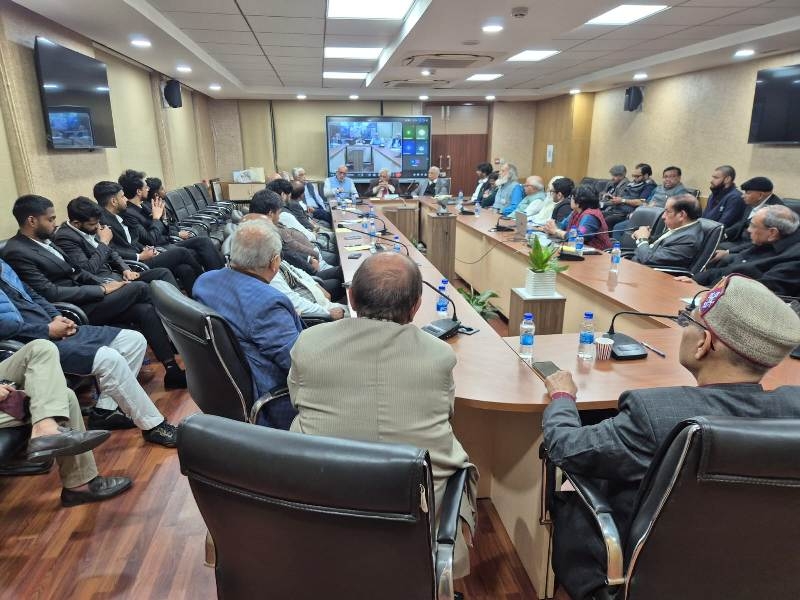
Responding to a question about the fate of Subhas Chandra Bose, Major General Bakshi stated that definitive answers may only emerge when relevant archival material held by foreign government, particularly in Russia and Britian is fully declassified. He suggested that files allegedly held by British intelligence agencies such as MI5 and MI6, as well as Soviet archives, may contain information that clarifies unresolved questions surrounding Netaji’s disappearance.
In assessing Bose’s leadership, a participant argued that he demonstrated stronger strategic acumen in international affairs than Jawaharlal Nehru, particularly in navigating wartime geopolitics. This comparison was framed in the context of Bose’s engagement with Axis powers and his attempt to leverage global conflict for India’s independence.
The broader point made during the exchange was that India’s freedom struggle contained multiple ideological strands, and that these histories should be transmitted clearly and comprehensively to future generations.
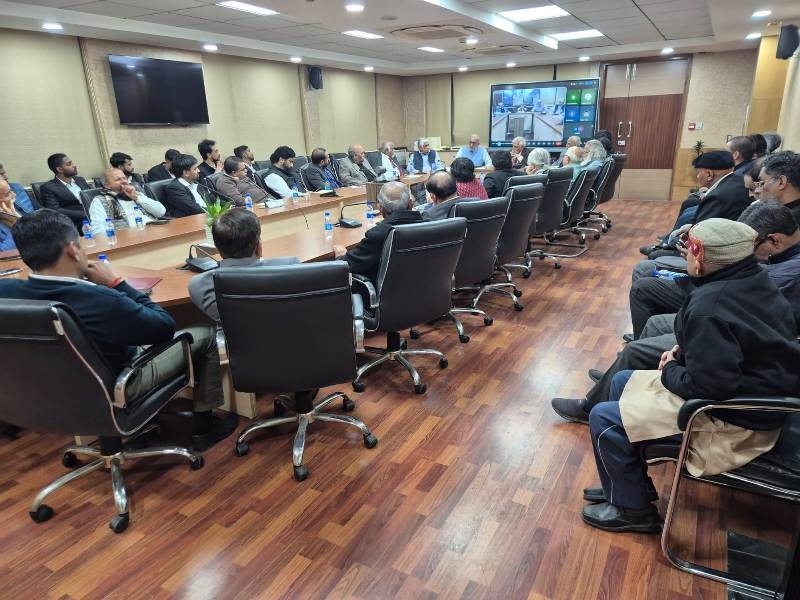
The session concluded with a call to ensure that people are made aware of lesser-discussed chapters of India’s independence movement, particularly those involving armed revolts.
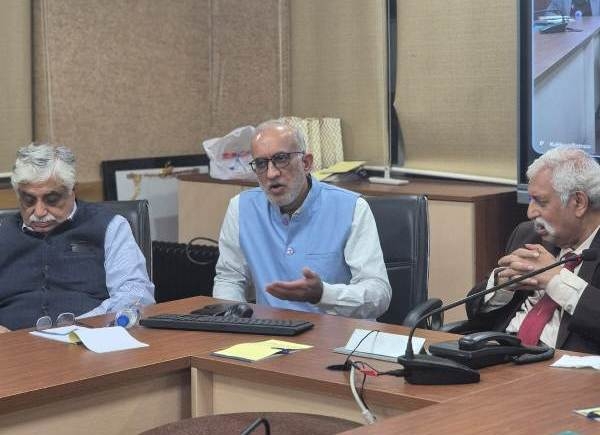
The discussion underscored sharp differences in interpreting India’s path to independence but reflected a shared view among the speakers that the armed dimensions of the struggle deserve greater public attention and institutional recognition.