Urgent need to address Illegal Immigration
15 Jul 2020 18:32:00
Urgent need to address Illegal Immigration
By Yatan Sharma and Ananya S. Varma
July 15, 2020
Introduction
The forces of globalization have tremendously increased the issue of migration irrespective of its type. However, it would be spurious to assume that prior to globalization, there was no migration. Unequivocally it was there but its intensity was much lower. Exchange of people have not only benefited the global economy but have also fostered the overall development of the world. With the ascendancy of globalization, the concept of cosmopolitanism also gained currency. The concept has ushered the world towards the consideration that since we are living in the globalized era where territorial borders are of least importance, we should consider a person not merely as a citizen of a specific country but as a citizen of the world. However, when we look at the other facet of the coin, we will discover that the issue of migration is not as simple as it seems to be. Staunch supporters of globalization are also apprehensive about the issue of illegal migration. Predicaments of illegal migration are one of the fundamental causes of the trepidation of the major countries whether it isa superpower like the United States or an emerging power like India. Nonetheless, we often confuse or transpose the terms unauthorized citizens with that of refugees, asylum seekers, tourists and other cross border movements but there are subtle but crucial differences between them which we have tried to demarcate in the essay. We have also tried to identify the causes that have possessed the issue of illegal migration as an unquenchable challenge for the major countries. Following that, we have also tried to analyze the impact of such movements on the countries and measures taken by them to preclude or desist such illegal cross border movements.
Understanding Illegal Migration
Generally, migration is defined as the process of willful departure of citizens from one territory to another in search for a job, family union or for other socioeconomic reasons. The United Nations Migration Agency defines a migrant as any person who is moving or has moved across an international border or within a State away from his/her habitual place of residence, regardless of (1) the person’s legal status; (2) whether the movement is voluntary or involuntary; (3) what the causes for the movement are; or (4) what the length of the stay is.1 What distinguishes illegal migration from the legal one is that it refers to the migration of people into a country in violation of the immigration laws of that country, or the continued residence of people without the legal right to live in that country. Illegal immigration tends to be financially upward, from poorer to richer countries.2 Movement of such undocumented citizens has surged abruptly in this globalized era and has consequently possessed a threat to the both internal and external security of the country. The impacts of illegal migration have been discussed comprehensively in the essay later. The word which is ostensible taken as tantamount to undocumented citizens isrefugee. Nonetheless, there is a hairline difference between the two. In the 1951 Refugee Conviction, Refugee isdefined as A person who, owing to a well-founded fear of persecution for reasons of race, religion, nationality, membership of a particular social group or political opinion, is outside the country of his nationality and is unable or, owing to such fear, is unwilling to avail himself of the protection of that country; or who, not having a nationality and being outside the country of his former habitual residence as a result of such events, is unable or, owing to such fear, is unwilling to return to it.3 In a nutshell, migration (irrespective of its type) is a willful departure while refugee is a forceful one. In resemblance to it, an asylum seeker is someone whose claim has not yet been finally decided on by the country in which he or she has submitted it. Not every asylum seeker will ultimately be recognized as a refugee, but every recognized refugee is initially an asylum seeker.4
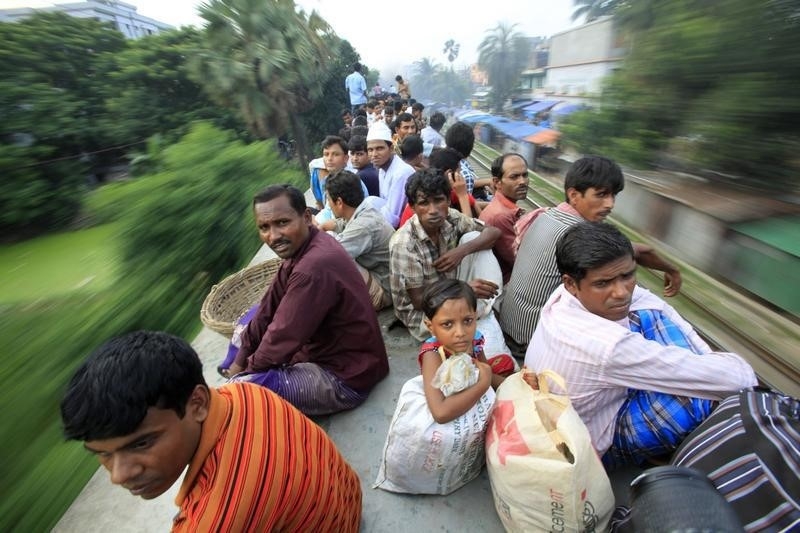
Coming back to the issue of illegal migration, it would not be a hype to say that significant percentageof total global migration is illegal. Unauthorized citizens move from poorly developed countries to either developing or developed countries. Illegal cross border movements of Mexicans to the US and Bangladeshis to India are examples of it. Push factors like unemployment, political instability, low pay scale, labour exploitation, inadequate availability of food, life threatening circumstances etc. are the fundamental causes that evoke undocumented citizens to flee away from their home country. On the contrary, pull factors like employment opportunities, better pay scale, family reunification, better security facilities etc tempts the illegal migrants towards the host country.There are numerous causes that made countries edgy about the issue. The resources that were sufficient enough to meet the needs and demands of the citizens of the host country, inclusion of undocumented citizens in the total population of the country has led to the dearth of resources for the indigenous masses. For instance, multinational corporations (MNCs) are hiring these undocumented citizens as labour over the native citizens, primarily because of the two reasons. Firstly, they are ready to render their services at a much lower wage than the skilled citizen. And secondly, since unauthorized citizens do not possess any legal identity, companies are not entitled to ensure their social security. Both these factors evoke MNCs to offer jobs to such unauthorized citizens at the cost of local masses. Whether it is the US, the UK or India, they all share a congenial plight because of illegal cross border movements. Over a period of time, it has been observed worldwide that such people promote illegal activities in the host country which have had grievous cascading effects on the economy, culture and security of the country. As time passes, such people start acquiring identity proof through illicit processes. Thus, identification of such people and the process to deport them to their native places becomes difficult. It is an obvious fact that the presence of such unauthorized citizens (about whom the state does not have any data) in the territories of respective countries has been posing a great challenge to their internal security. Ergo, to protect the further socio-economic and political deterioration of the state due to illegal cross border movements, there is an ineluctable need to halt such movements.
Measure adopted by countries to halt such movements
Numerous countries of the globe have adopted various measures and policies to curb the cross-border movements of unauthorized citizens. Presence of effective International Organizations and the effective implementation of Human Rights Laws have refrained countries to adopt savage methodologies to deal with the unauthorized citizens. Let us try to look at some of the recent policy measures adopted by the countries to breast off the issue. Starting with Germany itself, whichhas recently passed a controversial migration law that facilitates the deportation of failed asylum seekers and unauthorized migrants from its territory. Prior to that, numerous measures were adopted by the Government of Germany but were unable to bear fruitful results. The new law, that was passed on 5th July 2019 aims towards the significant increment in the proportion of successful deportation. Approximately half of the planned 188,000 deportations from Germany since 2015 failed or were not carried out, according to interior ministry data.5 Akin to it, the United States is also zestful to deport undocumented citizens from its territory and to restrict the others to trespass on their land. Majority of illegal cross border movements have been taking place from Mexico. Better job opportunities, higher pay scale and good socio-political environment are some of the captivating factors. However, president Trump and his administration haveacknowledged the ineluctable need to address the issue. Consequently, they have tried a variety of deterrent measures affecting both illegal entrants and asylum seekers in recent years. Few of them are- asylum seekers caught crossing illegally must wait across the border in Mexico for adjudication, border officials have decreased the number of asylum cases they process each day, a strategy called metering and most controversially, thousands of migrant children were separated from their parents at the border as a part of a zero tolerance policy that prosecuted anyone found crossing illegally.6 Resembling the traits from these two states, countries like Italy, Switzerland, Greece, Australia, Japan and the United Arab Emirates also have very strict laws to prevent the illegal cross border movements.
India’s plight is not different from that faced by these countries. Since its independence, India is persistently facing the issue of illegal cross border movements. The War of 1971exploded the migration of unauthorized citizens from erstwhile East Pakistan (now Bangladesh) into Indian Territory. An analysis of population growth and demographic statistics for Bangladesh and India in the last four censuses of 2011, 2001, 1991, and 1981, however, suggests with reasonable certainty that their number exceeds 15 million. Most of them have settled in states along the border with Bangladesh, and some subsequently moved to other parts of India, including its remote corners. A large number are engaged in menial jobs in metropolitan cities in different parts of India.7 The movement has led significantly to shifting the population trend in India's northeastern states where the natives feel outnumbered by the outsiders. In order to address the crisis Government of India passed the The Illegal Migrants (Determination by Tribunals) Act8 in December 1983 but was unable to make any significant progress. Later in the year 2005, delivering its verdict in SarbanandaSonowal v. Union of India case, the Supreme Court of India struck down the Act on the grounds that it has created the biggest hurdle and is the main impediment or barrier in the identification and deportation of illegal migrants.9 Assam Accord was also signed in the year 1985. The accord envisaged that all foreign nationals who had entered the territory of Assam on or after 25th of March 1971, were to be detected and their names from the electoral rolls (if enrolled) would be deleted and subsequently such unauthorized citizens would be deported as per the Foreigners Act 1946. Even after 34 years, not a single undocumented citizen has been deported to Bangladesh. Recently, the BJP-led NDA government, on the direction of the hon’ble Supreme Court of India successfully accomplished the exercise of NRC in the state.
However, human rights activists and leaders of opposition thwart the act of government on the grounds that the government has not given ample and fair opportunities to the residents to prove their identity and has subsequently neglected the issue of human rights. Advocates of cosmopolitanism also criticized the move and argued that a person is not a citizen of merely a state or a country but is a citizen of the globe. Now the question arises, when other countries of the globe, whether the US, the UK or Germany, have implemented strict measures to preclude the illegal cross border movements, where were these advocates of human rights? Do they want to favour the development of such unauthorized citizens at the cost of indefatigable masses that are working for the development of India? If they are really concerned about human rights, then why are they organizing nationwide protests against the Citizenship (Amendment) Act? If we try to comparatively analyze the policies adopted by various countries to deal with the issue of trespassing and with unauthorized citizens, we will find that the methodologies adopted by the current government are more humane and sensitive to ‘human beings’.
References
1. UN.org- https://www.un.org/en/sections/issues-depth/migration/index.html
2. Taylor, Mark (December 2007). "The Drivers of Immigration in Contemporary Society: Unequal Distribution of Resources and Opportunities". Human Ecology.
3. IOM UN Migration- https://www.iom.int/key-migration-terms#Refugee-1951-Convention
4. Ibid
5. Politico- https://www.politico.eu/article/germany-passes-controversial-migration-law/
6. BBC News- https://www.bbc.com/news/world-us-canada-44319094
7. Carnegie India- https://carnegieindia.org/2016/06/29/illegal-immigration-from-bangladesh-to-india-toward-comprehensive-solution-pub-63931
8. http://legislative.gov.in/sites/default/files/A1983-39.pdf
9. https://indiankanoon.org/doc/907725/