IPF Round Table Discussion on “The Crisis of Globalisation and the Rise of Swadeshi”
Total Views |


“The scope and meaning of Swadeshi have expanded from textiles to technology”: Shri Kashmiri Lal
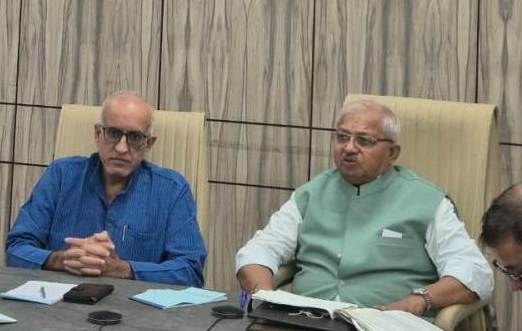
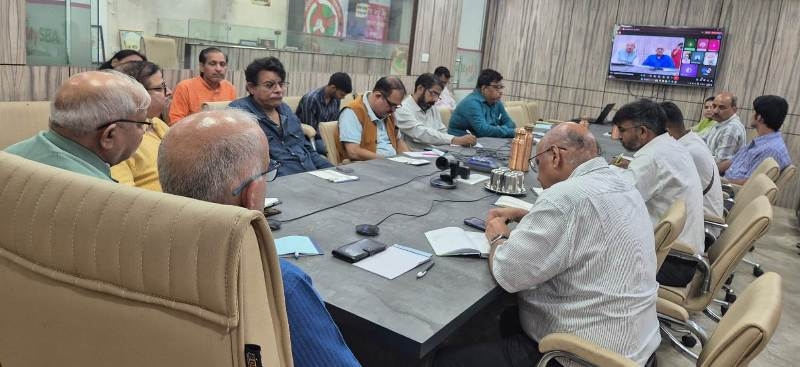
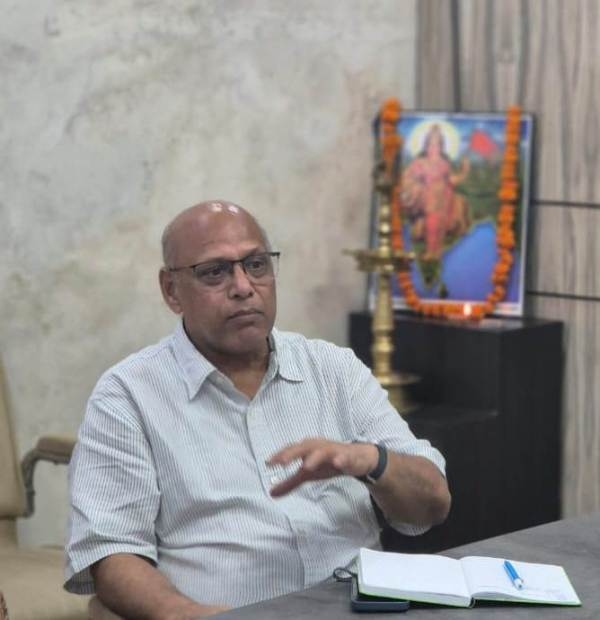
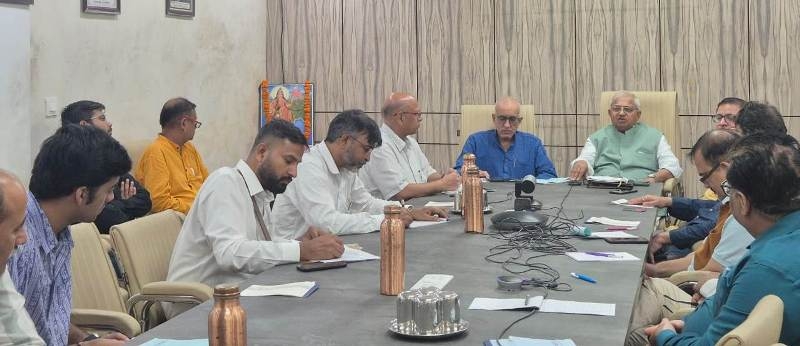
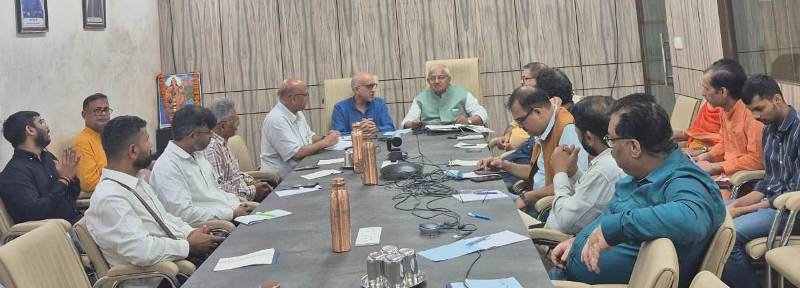
27 September 2025: “The scope, vision, and meaning of Swadeshi have greatly expanded”, observed Shri Kashmiri Lal, Akhil Bhartiya Sanghathak, Swadeshi Jagaran Manch (SJM), while speaking at a round table discussion on “The Crisis of Globalisation and the Rise of Swadeshi.” The event was organised by the India Policy Foundation (IPF) and moderated by Dr. Kuldeep Ratnoo, Director, IPF. It was attended by several distinguished people from different fields who discussed the historical evolution, present significance, and future direction of the Swadeshi movement in view of waning globalisation and renewed emphasis on self-reliance.
The discussion was organised in the backdrop of appeal made by Prime Minister Shri Narendra Modi to buy Swadeshi products. In this regard, Shri Kashmiri Lal emphasise that it has become important for all countries to deliberate on the issue of self-reliance, considering the sudden change in the trade policies of the US under President Donald Trump. According to him, Swadeshi remains rooted in the same enduring spirit of resisting exploitation and asserting independence, but its scope has now expanded to encompass broader domains such as cybersecurity, indigenous weapons, data sovereignty, and digital platforms.
Elaborating on the evolving scope of Swadeshi, he observed that while during Gandhi’s era, Swadeshi was about textiles, today it extends to intellectual property rights (IPR), microchips, robotics, and space technology—symbolised by achievements like Chandrayaan. “Today, our understanding of Swadeshi has broadened significantly. From once emphasising that textiles should be Swadeshi during Gandhiji’s time, we have now reached the stage of Chandrayaan. Earlier, we spoke of making Swadeshi snacks like potato chips; now, we speak of making Swadeshi microchips,” he added.
He also highlighted how the methods of warfare have evolved, making indigenous IT, defence, and digital platforms increasingly critical. He observed, “Earlier, we depended on spies to gather information; now we have technology. Previously, we had to cross borders to wage a war; today, we can send drones across those borders while sitting within our own homes. We can now neutralise our enemies without ever crossing the border. Swadeshi has therefore gained even greater significance with the development of indigenous weapons and systems.”
Shri Kashmiri Lal also stressed the importance of India’s IT industry in shaping the nation’s self-reliant future. He underlined the urgent need for India to develop its own indigenous IT systems and platforms, asserting that without them, the country would not be equipped to fight the battles of the future, which are increasingly being waged in the digital domain. He further observed that India’s youth have the potential to contribute to the nation’s economy on par with the earnings of oil-rich countries through their technological talent and innovation.
In his opening remarks, Dr Kuldeep Ratnoo noted the global shift in economic strategies, observing that nations across the world are increasingly turning inward to safeguard their economies and protect domestic employment. He highlighted that Swadeshi, which was once at the heart of India’s freedom movement, has now re-emerged as a central pillar of national policy under the leadership of Prime Minister Narendra Modi.
Tracing its origins, Dr Kuldeep Ratnoo recalled that the idea of Swadeshi took root in the 19th century, when Dadabhai Naoroji wrote a seminal work detailing the British exploitation of the Indian economy and raising several issues of economic significance. His critique of colonial rule, Dr Ratnoo noted, sparked a crucial debate on whether foreign powers should be given a free hand to continue exploiting India’s resources.
Building upon Naoroji’s ideas, leaders such as Lokmanya Tilak and Aurobindo Ghosh advanced Swadeshi as both an economic philosophy and a nationalist ideal. “The feeling of ‘Swa’, or self, evolved into Swadeshi, which in turn transformed into nationalism. This provided a major impetus to India’s freedom struggle,” Dr Ratnoo observed. He further added that the concept of ‘Swa’ has its origins in Indian culture and represents a comprehensive and deeply rooted civilizational principle.
Elaborating further, Dr Ratnoo said that Mahatma Gandhi gave it a new direction by making the charkha a weapon and calling for the boycott of foreign goods. With this, more people began wearing Swadeshi clothes and started recognising the need to frame India’s own economic policies. Post-independence, Swadeshi found expression in public sector growth and import substitution in efforts to make India self-reliant.
He also touched upon the rise of the General Agreement on Tariffs and Trade (GATT) and the World Trade Organisation (WTO) as instruments of global economic control. He noted that global economic powers created a system through which they sought to control the international economy by means of patents and investments. In response, the Swadeshi Jagaran Manch (SJM) led nationwide movement to prevent India from caving in to Western pressures and to raise awareness among Indians about the continued relevance and necessity of the Swadeshi movement.
Today, as the world witnesses a reversal in globalisation trends, Dr Ratnoo noted that India’s resurgence of Swadeshi is both timely and strategic. He remarked, “Today, we are the fourth largest economic power globally, but once again, a situation has arisen where the very force that drove globalisation for its vested interests has suddenly taken a 180-degree turn and are now advocating nationalism and protectionism. It has started imposing high tariffs to protect its economy and jobs, thereby unsettling the global economic order.”
In the discussion that followed, Dr Ratnoo asked whether the current thrust on Swadeshi was a knee-jerk reaction to President Trump’s tariffs and global protectionism or part of a well-planned vision. Shri Kashmiri Lal responded that it is strategic, not reactive. He noted that Prime Minister Narendra Modi, drawing from his extensive governance experience, has long championed the cause of Swadeshi through initiatives such as National Handloom Day, Make in India, Atmanirbhar Bharat, and Vocal for Local.
He reminded that when Narendra Modi was the Chief Minister of Gujarat, the United States had displayed a whimsical attitude by declaring that he would not be allowed to enter their country. “So even before coming to power in 2014, he was well aware of the ways of America. As soon as he came to power in 2014, Prime Minister Modi began spreading awareness across the world about the values of India,” he said.
Shri Kashmiri Lal noted that since 2015, August 7 has been celebrated as National Handloom Day to commemorate the Swadeshi Movement, which began on this day in 1905. He further highlighted that, due to the Prime Minister’s efforts, International Yoga Day is now celebrated across the world.
He also emphasised how India successfully manufactured two vaccines when the West refused to provide them, showcasing the nation’s capability for self-reliance. Referring to the Prime Minister’s Mann Ki Baat addresses, he pointed out that self-reliance and Swadeshi have been recurring themes. Shri Kashmiri Lal concluded by saying that the time has come to move beyond ‘Make in India’ and advocate for ‘Made by India’ and ‘Manufactured by Indians.’
Shri Anil Sharma, representing Swadeshi Shodh Sansthan, highlighted India’s remarkable progress in defence manufacturing. He stated, “From a massive import bill of ₹26,000 crore in 2014–15, India now exports weapons worth ₹25,000 crore, with a target of ₹50,000 crore by 2030.” He further noted that indigenous 5G technology, developed at IIT Madras, was successfully utilised in national operations, exemplifying India’s growing self-reliance in critical and strategic sectors. He also pointed out that NSA Ajit Doval’s visit to IIT Madras underscored the institution’s achievement in developing indigenous 5G technology within just two years, while other nations took up to 16 years to achieve the same. Indigenous technology, he noted, was successfully deployed during Operation Sindoor.
In the discussion, Dr Ratnoo raised a query whether the current calls for Swadeshi are in the same spirit as when the movement was first launched against British exploitation and later against the rules imposed by the WTO. Shri Kashmiri Lal responded by saying that the Swadeshi Movement of 1905 in Bengal can be considered the first step in the present cycle. He remarked, “The spirit of Swadeshi remains the same. It is against exploitation and the mindset of slavery. In 1905, when the partition was forced on Bengal, the revolution led by Lal, Bal, and Pal was one of the greatest in the world, as it stood up to a hegemonic power about which it was said that the sun never sets.” The atmosphere today, he said, is conducive for India to take this movement forward and secure its place as a global power rooted in indigenous strength.
Shri Kashmiri Lal further emphasised that the WTO was established when it was realised that future wars would be fought on the economic front. “Today, our struggle is against the United States and China. Earlier, revolutions were waged against the government, but this time, the government and the people are together in supporting Swadeshi. Therefore, this movement is certain to succeed,” he added.
Participants raised concerns about foreign investments in Indian startups and the dominance of global digital platforms such as Google, Facebook, and Amazon. Dr Ratnoo posed an important question: when discussing economic sovereignty, should the definition of Swadeshi be limited only to what is sold in the market, or should its scope be expanded to encompass broader dimensions?
Emphasising the criteria for Swadeshi enterprises, Shri Kashmiri Lal stated that there are three essential conditions for a business to be considered Swadeshi: 1. The owner should be an Indian. 2. The major shareholders in the business should be Indians. 3. The royalty and profits should remain within India.
He also cautioned that one should not be lured by marketing, citing the example of Colgate, a foreign company that sells toothpastes using Indian product names like Vedshakti. He further stressed that language, attire, medicines, and lifestyle practices should all reflect the spirit of Swadeshi, and that it is equally important to celebrate our festivals with the same ethos. Recalling Dr. K.B. Hedgewar’s words, he said that “our caps should be Swadeshi, but even our minds should be Swadeshi.” He added that beyond the goods sold in the market, the things we use in daily life and the values we uphold must also be Swadeshi.
Shri Kashmiri Lal recalled Shri Dattopant Thengdi quoting Mr David McCord Wright, who said that “the fundamental factors driving economic growth are non-economic and non-materialistic in nature.” He further added that “it is the spirit that builds the body.”
On the query whether electronic gadgets, the parts of which are imported but the final products are assembled in India, should be considered Swadeshi goods, Shri Kashmiri Lal explained that the same question had arisen during the time of Pandit Deendayal Upadhyaya and Shri Dattopant Thengdi. They had said that “we are desi by choice” and should therefore make a conscious effort to buy goods produced closest to our locality, which is also the essence of the Vocal for Local campaign. He added that if certain products are not available locally, one should turn to larger Indian brands, but if something is entirely unavailable in India, then purchasing foreign goods becomes unavoidable. However, he emphasised that the goal should not be to make this a habit, but rather to strive toward producing all essential goods domestically.
He also recalled a conversation between a student and Dr K.B. Hedgewar, in which the student asked whether one should wear eyeglasses, as lenses were not manufactured in India at the time. Dr Hedgewar replied that proper vision is important and so, wearing eyeglasses was necessary. However, he added that importing fashionable coloured glasses, which were not essential, could be avoided.
Shri Kashmiri Lal further stated that if India is importing technology, it should focus on value addition, following the examples of China and Japan. He emphasised that India must first make a concerted effort to make the entire FMCG sector Swadeshi, as it is an area that doesn’t require advanced technology and can be easily localised.
Shri Anil Sharma pointed out that earlier, 90 per cent of Maruti’s parts used to be imported from Japan. Later, it was decided that 30 per cent would be locally sourced, which led to the establishment of joint ventures. Today, he noted, these Indian companies supply glass to nearly 90 per cent of automobile manufacturers in the country. He added that within 10 to 15 years, India was able to achieve significant technology absorption, and a similar transformation is now taking place in mobile phone production.
Participants voiced concerns over e-commerce giants undermining small businesses. Shri Kashmiri Lal stressed the need to empower local traders with technology, citing AMUL as a successful cooperative model that balances profit with inclusive growth. He mentioned that in September 2025, 35 major trade and industry organisation had come together to discuss policies to curb malpractices by large corporations. Another participant observed that large companies attract customers through heavy discounts, making it difficult for smaller businesses to compete. In response, Shri Kashmiri Lal remarked, “This is capitalism.” He emphasised that traders must be technically equipped and supported to effectively compete with big players.
Dr. Ratnoo also raised the issue of data sovereignty, asking Shri Kashmiri Lal whether the time had come for India to shift to indigenous digital platforms, given that most data currently lie with big tech companies. In response, Shri Kashmiri Lal said that efforts in this direction are already underway, citing Shri Sridhar Vembu, who has launched indigenous platforms such as Zoho and the Arattai app. He also mentioned the example of Flipkart, which was developed by an Indian, and noted that its sale for USD 16 billion demonstrated the West’s dependence on Indian innovation and technology. Concluding his remarks, Shri Kashmiri Lal urged the youth of the country to take this mission forward and work towards strengthening India’s technological self-reliance.
Shri Kashmiri Lal recalled how in Sivakasi, many people lost their jobs when firecrackers from China began flooding the Indian market. He highlighted how the Swadeshi Jagaran Manch (SJM) actively campaigned for anti-dumping laws and, in 2017, led a major movement against Chinese imports. As a result of such efforts, he noted with satisfaction, most of the LED bulbs sold during Diwali are now made in India.
Dr Ratnoo observed that in India, the capital expenditure of the private sector remains low. He noted that while the government is continually engaging with private companies to encourage greater capex, many of these firms remain primarily focused on profit maximisation through investment in capital markets or real estate. A participant observed that India’s financial sector remains underdeveloped, noting that there are numerous high-frequency trading (HFT companies make huge profits by exploiting systematic loopholes. He emphasised that such practices must be regulated and controlled.
_202510062001009098_H@@IGHT_328_W@@IDTH_800.jpeg "seminar")
It was also suggested that there should be a system to label each product as Swadeshi or Videshi to help consumers make informed choices. In response, Shri Kashmiri Lal explained that the government is not in a position to implement such labelling due to the provisions of existing free trade agreements. However, he added that the Swadeshi Jagaran Manch (SJM) is already undertaking this initiative at the societal level, helping people identify and support Swadeshi products and enterprises.
Outlining the next steps, Shri Kashmiri Lal emphasised five focus areas: 1. Encouraging street vendors and shopkeepers and making them aware of the Swadeshi movement 2. Taking Swadeshi awareness to schools to instil the idea of self-reliance from a young age. 3. Engaging social groups to build wider community participation. 4. Harnessing social media to spread the message effectively. 5. Involving youth in the movement to ensure its continuity and relevance for the future.
The session ended with a shared understanding that Swadeshi is not just an economic policy, but also a cultural, technological, and strategic vision for India. From fighting colonial exploitation in 1905 to challenging WTO rules and today’s global digital dominance, the spirit of Swadeshi remains important—asserting India’s sovereignty and self-reliance.